What's in the Kitchen Says Everything: How to Read a Host Before You Ever Unpack
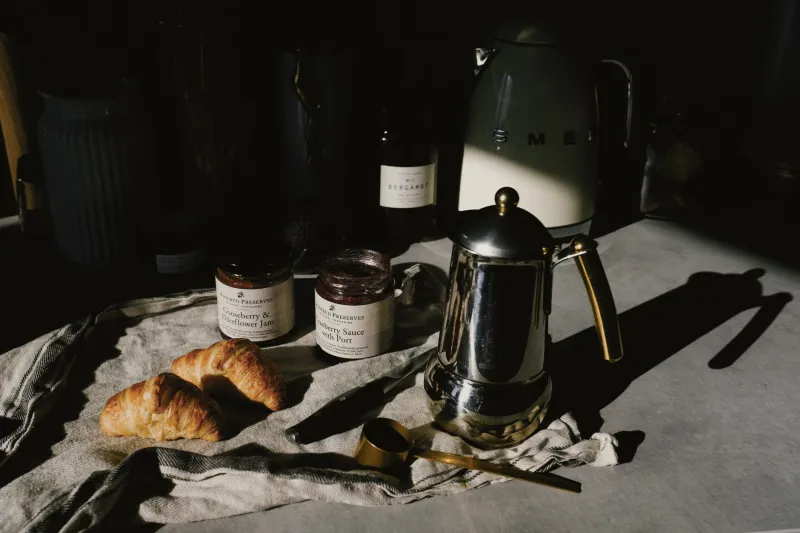
You've scrolled the photos. The living room looks great. The bedroom is clean and bright. But then you hit the kitchen shot, and something feels a little off — or maybe a little too right — and you can't quite put your finger on why.
Here's the thing: the kitchen is the most honest room in any rental listing. It's where hosts either show up for their guests or quietly reveal they haven't thought much past the Wi-Fi password. And for travelers who've learned to look carefully, that one photo can tell you more about your upcoming stay than a dozen five-star reviews.
Let's break down what you're actually seeing.
The Difference Between a Staged Kitchen and a Stocked One
Every host knows to wipe down the counters before the photographer arrives. What separates a genuinely guest-ready kitchen from a camera-ready one is what's left out when the shoot is done.
A staged kitchen looks pristine because it's essentially empty. A stocked kitchen looks lived-in because someone actually thought about what a person needs at 7 a.m. in an unfamiliar place. We're talking about the basics: coffee, filters, a decent pan, cooking oil, salt and pepper, maybe some sugar packets or a bottle of dish soap that isn't bone dry.
None of this is glamorous. But it signals something important — this host has been a guest somewhere before. They remember what it felt like to hunt for a coffee filter at dawn in a strange city, and they decided not to put you through that.
The Coffee Setup Is a Personality Test
This sounds like a joke, but it isn't. How a host handles coffee in their rental reveals their entire philosophy toward hospitality.
A pod machine with three leftover capsules from a previous guest? That's a host who checked the box. A drip machine with a bag of locally roasted beans from a shop two blocks away? That's a host who's thought about the neighborhood you're waking up in. A full French press setup next to a handwritten note recommending the café down the street for when you want to get out of the house? That's a host who genuinely wants your trip to be good.
The coffee setup isn't about coffee. It's about whether someone considered what your morning would feel like.
Local Flavor in the Pantry Is a Green Flag
One of the most underrated signs of a thoughtful host is finding regional or local products tucked into the kitchen. A jar of hot honey from a nearby farm stand. A bottle of local hot sauce. A bag of grits in a rental in Charleston, or a canister of good chili powder in a spot outside Santa Fe.
These touches aren't accidents. A host who stocks their kitchen with local flavor is essentially introducing you to the neighborhood before you've stepped outside. They're saying: this place has a food culture, and I want you to taste it.
Contrast that with a kitchen stocked entirely with generic grocery store staples that could belong to a rental in any city in America. It's not a dealbreaker, but it's a signal that the host thinks of their property as a unit to be filled rather than a place with a story to tell.
What the Fridge Actually Tells You
An empty fridge is fine — expected, even. But how it's empty matters. A clean, odor-free fridge with a fresh box of baking soda and maybe a few condiments left for guests? Someone's paying attention. A fridge that's been wiped down but still carries a faint mystery smell? Someone's cutting corners.
Some hosts go further and leave a small welcome spread: a local juice, a couple of eggs, some butter, maybe a piece of fruit. This isn't required, and it shouldn't be the standard you judge everyone by. But when it happens, it almost always predicts something about the entire stay — that the host is going to be responsive, that the place is going to be clean in all the corners you don't immediately check, and that your questions will get answered promptly.
Hospitality, it turns out, scales. The host who thinks about your first morning also tends to think about your last night.
How to Spot This in a Listing Before You Book
You won't always get a close-up kitchen photo, but here's what to look for when you do:
Look at what's on the counter. A coffee maker, a toaster, a fruit bowl, a paper towel holder — these are signs of active use. A completely bare counter, while visually clean, sometimes means the kitchen is more prop than workspace.
Read the amenities list carefully. Listings that mention specific items — a pour-over setup, a spice rack, a well-stocked pantry — are usually written by hosts who know why those details matter. Vague descriptions like "fully equipped kitchen" tell you almost nothing.
Check for any mention of local recommendations. Hosts who reference nearby grocery stores, farmers markets, or breakfast spots in their listing description are hosts who've thought about your experience beyond the checkout process.
Look at review language. Guests who mention the kitchen specifically — "loved that they had everything we needed," or "the local coffee they left was such a nice touch" — are leaving you a roadmap.
The Bigger Picture
At ManyuBnB, we talk a lot about the difference between staying somewhere and actually living somewhere, even for just a few days. The kitchen is where that distinction gets made concrete.
A host who's stocked their kitchen thoughtfully has done more than make your morning easier. They've made a quiet argument that your stay is worth their attention — that you're a guest in a real place, not a transaction passing through a managed property.
That argument, it turns out, tends to hold up across the entire stay. The same host who left local hot sauce on the counter is usually the one who responds to your message within the hour, whose sheets smell like they were actually washed recently, and whose neighborhood tips turn out to be genuinely good.
The pantry doesn't lie. Next time you're scrolling listings, give the kitchen photo a second look. It's the most honest thing in the room.