What's Waiting in the Morning: How a Host's Breakfast Setup Tells You Everything About the Stay Ahead

There's a moment that happens in almost every rental stay — usually around 7 a.m., still half-asleep, shuffling toward the kitchen. And in that quiet, unhurried minute before the day starts, you learn something true about the person who handed you the keys.
The breakfast setup — or the pointed absence of one — is one of the most honest things a host ever shows you. It's not curated for photos the way the living room might be. It's not scripted like the welcome message. It's just what's there, or what isn't. And if you know how to read it, you've got a pretty clear picture of how the rest of the week is going to feel.
The Coffee Situation Is Not a Small Thing
Let's start with the obvious. Coffee isn't a luxury in America — it's a baseline. But what kind of coffee, and how it's presented, says a lot.
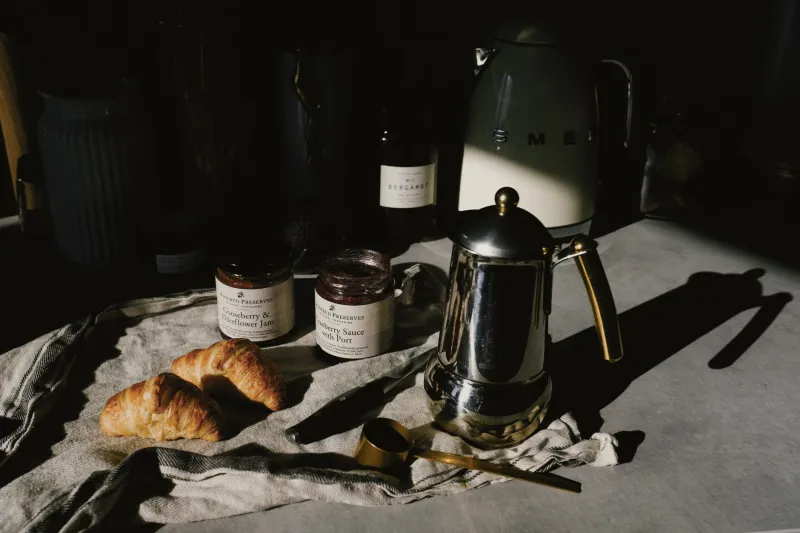
A host who leaves a quality bag of whole beans alongside a grinder is making a statement: I thought about you before you got here. A drip machine stocked with fresh pre-ground from a local roaster hits the same note. Even a well-maintained pod machine with a variety of options shows some intentionality.
What you don't want to see? A dusty machine with one forgotten pod rattling around inside it, or worse, nothing at all with a vague sticky note pointing you toward the nearest gas station. That's not minimalism — that's indifference. And indifference in the kitchen tends to show up everywhere else in the rental too.
If a listing specifically mentions coffee setup in the description, take that as a good sign. Hosts who think it's worth mentioning usually think a lot of other things are worth mentioning too.
Local Goods Are a Love Language
Here's where things get genuinely exciting for the right kind of traveler. A jar of honey from a farm two towns over. A loaf of bread from the bakery that's been on Main Street since 1987. A bag of grits from a regional mill if you're somewhere in the South. These aren't accidents — they're a host saying, this place has a flavor, and I want you to taste it.
That's the whole ManyuBnB philosophy in a jar of local jam, honestly. Staying local and living the story means your mornings should feel like the destination, not like a generic continental spread that could exist anywhere from Tulsa to Tacoma.
When you're browsing listings, look for hosts who mention local products by name. It signals someone who's plugged into their community — and that kind of host is almost always the one with the good restaurant tip, the hidden trailhead, and the honest answer about which part of town to avoid.
Dietary Awareness Is a Proxy for Guest Awareness
A host who stocks oat milk alongside regular, or leaves a note saying gluten-free options available upon request, is doing something more meaningful than just covering nutritional bases. They're demonstrating that they've thought about the fact that guests are real, varied humans with real, varied needs.
This kind of awareness tends to compound. The host who considers that you might not drink dairy is probably also the host who left extra towels, thought about blackout curtains in the bedroom, and made sure the smoke detector battery wasn't dying. Attention to detail doesn't usually show up in just one place.
Conversely, a kitchen stocked entirely with full-gluten, dairy-heavy, meat-centric basics isn't necessarily a red flag — but it might suggest a host who set things up once and hasn't revisited the experience from a guest's perspective since.
The Pantry Stock Test
Open the pantry (or peek at the listing photos if they include kitchen shots). What you're looking for isn't abundance — it's thoughtfulness.
A well-considered pantry has the basics covered: cooking oil, salt, pepper, maybe some pasta or canned goods for a quick meal. It tells you that the host understands guests sometimes come home late, tired, and not in the mood to hunt down a grocery store. It says: I've got you.
An empty pantry isn't a dealbreaker, but it does tell you something. It might mean the host is strictly hands-off — which some travelers prefer. But if the listing photos show a gorgeous, fully-equipped kitchen and the pantry is bare on arrival, that gap between presentation and reality is worth noting.
Pay attention to expiration dates too, if you can. Expired products left for guests aren't just a minor inconvenience — they're a sign that no one's done a real walkthrough of the space recently. That's the kind of thing that tends to extend to the light bulb that's been out for three weeks and the shower drain that's been slow since spring.
What a Handwritten Note Changes
Some hosts leave a card. Sometimes it's printed, sometimes it's scrawled on a notepad — but when it mentions something specific to your stay ("Hope you enjoy the farmers market on Saturday — it's two blocks east"), something shifts in how the whole experience feels.
A breakfast note that points you toward the good diner down the street, or explains that the espresso machine has a particular quirk, or just says welcome, make yourself at home — that's a host who sees their role as more than property manager. They're a local ambassador. And that kind of host almost always delivers a better stay across the board.
Using Breakfast as a Booking Signal
So how do you use all of this before you've even booked?
First, read the listing description carefully for any mention of kitchen or breakfast amenities. Specificity is a green flag. "Fully stocked kitchen with local coffee and fresh eggs from our neighbor's chickens" tells you more about a host's character than five-star reviews from people who just liked the location.
Second, look at the kitchen photos. Are there things on the counter that suggest someone actually uses this space, or does it look like a staged showroom? Real kitchens have small imperfections — and that's actually reassuring.
Third, don't be shy about messaging a host before you book and asking what the kitchen situation is like. A host who answers with enthusiasm and detail? Book it. A host who gives you a one-word response? That's useful information too.
The morning you wake up in a new place and find a good cup of coffee waiting, a note with a local recommendation, and a jar of something made within fifty miles — that's not just breakfast. That's a host who understood what travel is actually for. And those are the stays you remember long after you've checked out.