Follow the Locals: The Rising Neighborhoods Smart Travelers Are Booking Before Everyone Else Catches On
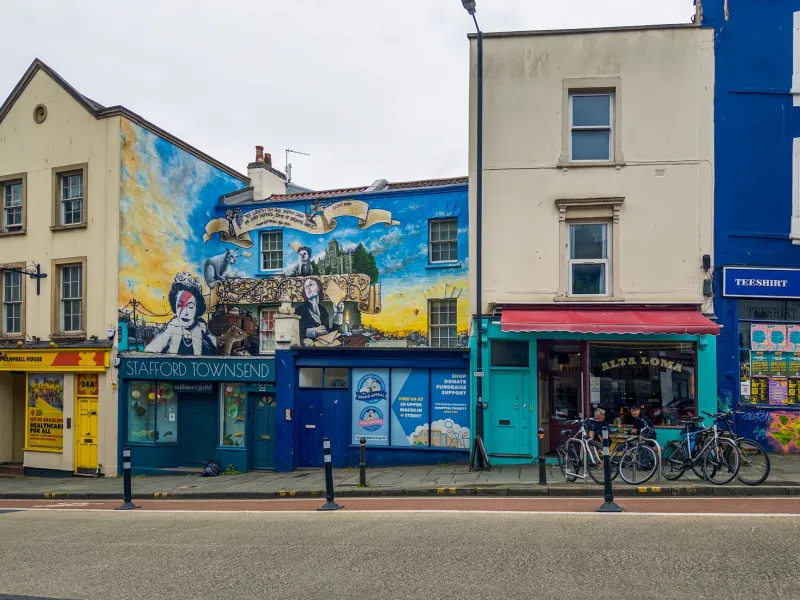
There's a pattern that plays out in American cities on a pretty reliable loop. A neighborhood gets discovered. Then it gets written about. Then it gets a rooftop bar and a waitlist. Then the people who made it interesting in the first place—the artists, the small-business owners, the families who stretched to buy a bungalow—start looking over their shoulders at the rent increases and quietly start asking: where are people actually moving now?
That question, it turns out, is one of the most useful things a traveler can ask.
What the Listings Are Actually Telling Us
Short-term rental platforms are a surprisingly reliable mirror of real estate migration. When hosts start listing properties in a neighborhood that barely had a name two years ago, that's not random. Those hosts live there. They bought there, or they signed a lease there, because something was shifting—prices were still reasonable, the bones were good, and the energy felt like it was building rather than peaking.
Look at what's happened in cities like Nashville, Austin, and Denver over the past decade. The neighborhoods that dominate travel guides today—East Nashville, South Congress, RiNo—were once exactly the kind of transitional zones locals were quietly moving into while visitors were still stacking up in the established spots. The rental listings followed the residents. The travelers who found those listings early got something that's genuinely hard to manufacture: a neighborhood in motion, full of people who chose to be there.
Now that cycle is happening again, just one ring further out.
The Hosts Who Are Building Something New
Talk to hosts in these emerging secondary neighborhoods and you hear a version of the same story. They left somewhere more central—sometimes because they had to, sometimes because they wanted to—and landed somewhere that felt rawer, more real, and frankly more interesting.
A host in a transitional corridor just east of a major Midwestern city's arts district described it this way: "When I moved here five years ago, there were three good restaurants and a lot of potential. Now there are twelve restaurants, a farmers market, two new coffee shops, and my neighbors are actually starting businesses. It's not finished yet—and that's kind of the whole point."
That unfinished quality is exactly what makes these neighborhoods worth visiting. You're not walking into a set piece. You're walking into something that's still being written.
What "Transitional" Actually Means for Travelers
The word "transitional" gets used a lot in real estate circles, and it can mean a lot of things. In the context of finding a great place to stay, here's what it usually signals:
- Local investment is visible. New storefronts, freshly painted facades, community gardens, murals that weren't commissioned by a development company—these are signs that residents are putting their own money and time into a place.
- The rental hosts are genuinely embedded. In neighborhoods that have fully tipped into tourist territory, hosts often manage multiple properties and aren't around much. In emerging areas, you're more likely to be staying with someone who actually lives on the street, knows the neighbors, and has strong opinions about where to get breakfast.
- The price-to-experience ratio is still in your favor. You're getting more space, more character, and more authentic surroundings for less money than you'd pay in the neighborhood that made last year's travel roundups.
- The crowds haven't arrived yet. This sounds obvious, but it's worth saying: fewer tourists means the local businesses are still calibrated for locals. The menu at the corner spot wasn't designed for out-of-towners. The bartender isn't exhausted by the same questions. You get to be a real guest rather than a category.
How to Find These Neighborhoods Before You Book
You don't need insider access to spot where locals are migrating. You just need to look at the right signals.
Start with the rental map, not the tourist map. When you're browsing listings on ManyuBnB, zoom out from the city center. Look for clusters of listings that are slightly off the obvious grid—a zip code that's adjacent to the trendy one, a neighborhood name you don't recognize from any travel article. That unfamiliarity is worth investigating.
Read the host bios like they're dispatches. Hosts in emerging neighborhoods tend to write about their area with the enthusiasm of someone who made a bet and is watching it pay off. They'll mention the new brewery that just opened, the park that finally got renovated, the block party that's been going for three years. That specificity is a tell.
Ask your host directly. This is maybe the most underused resource in short-term travel. Before you arrive, message your host and ask: Where do the people who actually live here go on a Saturday morning? What changed in this neighborhood in the last two years? What do you think is coming next? A good host in a transitional area will have answers that no travel guide has published yet.
Look at what's missing. Counterintuitively, the absence of certain things—chain restaurants, souvenir shops, the kind of bars that have a line outside on Friday night—is often a green flag. It means the neighborhood is still oriented around people who live there.
The Bigger Picture
There's something genuinely exciting about traveling to a place that's in the middle of becoming something. The energy is different. People are invested in their surroundings in a way that shows up in small interactions—the pride a shop owner takes in recommending something, the way neighbors actually talk to each other on the sidewalk, the sense that the place has a direction it's heading.
Downtown will always have its appeal. The famous neighborhoods will always be worth a visit. But the neighborhoods that locals are actively choosing right now—with their own money, their own time, their own futures—those are the places where travel starts to feel less like consumption and more like participation.
Book a rental there before the travel magazines catch up. Talk to your host. Walk around without a plan. You might just end up somewhere that feels like a discovery, because for the people who live there, it still is one.