Listen Before You Book: What a Rental's Soundscape Tells You About the Neighborhood You're Actually Staying In
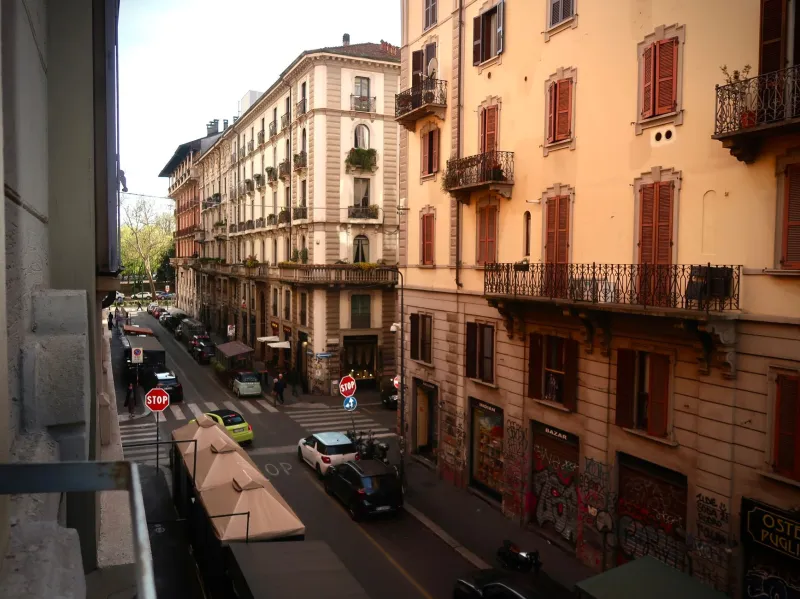
There's a moment every traveler knows. You arrive at your rental, drop your bags, and open the window — and suddenly the listing's carefully curated photos feel like they belong to a completely different place. Maybe it's a garbage truck grinding through the alley at 6am. Maybe it's a bar two doors down pumping bass until 2am. Or maybe — and this is the good version — it's the sound of a farmers market setting up, kids playing in the park across the street, and the distant hiss of an espresso machine from the café below.
Sound, it turns out, is the neighborhood's most honest storyteller. And if you know how to listen before you ever set foot inside a rental, you can make dramatically better booking decisions.
Why Photos Lie (and Ambient Sound Doesn't)
Listing photography is, by design, a kind of selective truth-telling. Wide-angle lenses make rooms feel spacious. Golden-hour shots make any block look romantic. Hosts — understandably — put their best visual foot forward.
But sound doesn't compress into a flattering frame. You can't filter out the highway noise with a Valencia preset. You can't crop out the neighbor's dog. The acoustic environment of a rental is raw, unedited, and deeply revealing — which is exactly why it's such a useful tool for travelers who've learned to pay attention to it.
Think of it this way: a neighborhood's soundscape is basically its daily diary. Morning sounds tell you who lives there and how they start their day. Afternoon sounds reveal the rhythm of local commerce and foot traffic. Evening sounds expose the social character of the place — whether it's families eating dinner on porches or a bar crowd spilling onto the sidewalk.
What Different Sounds Actually Signal
Not all noise is bad noise. And not all quiet is good quiet. The key is matching the acoustic environment to your actual travel goals, not some abstract ideal of what a vacation should sound like.
Street-level traffic and transit sounds usually mean you're in a genuinely walkable, connected neighborhood. If you hear buses, light rail, or the rhythm of pedestrian foot traffic, that's often a sign you've landed somewhere with real urban energy — close to restaurants, shops, and local life. For city travelers who want to be embedded in the action, this is a feature, not a bug.
Construction noise is trickier. A little daytime hammering might mean a neighborhood is being invested in, growing, and changing. Constant heavy construction starting at 7am sharp is a different story — one worth asking your host about directly before you commit to a week-long stay.
Neighborhood music and ambient social sounds — think someone practicing guitar in the courtyard, kids in a nearby schoolyard, or the low murmur of a weekend block party — tend to signal a lived-in, community-oriented block. These are often the best kinds of sounds a rental can have, because they mean you're staying somewhere real people actually call home.
Late-night bar and nightlife noise is the classic double-edged sword. If you're booking a long weekend in Nashville, Austin, or New Orleans specifically to be near the action, a rental that backs up to a honky-tonk strip is exactly what you want. If you're coming to decompress and sleep in, that same rental is a disaster waiting to happen.
How to Actually Audit a Rental's Sound Environment Before You Book
This is where it gets practical. Most travelers never think to investigate beyond photos and star ratings, but there are real, actionable ways to get a sonic preview of any listing.
Watch virtual tours with the sound on. Many hosts post walkthrough videos on their listings or social profiles. If there's ambient audio, listen to it. What do you hear in the background? Traffic? Birdsong? A neighboring unit's TV? These aren't accidents — they're data.
Ask your host directly about noise patterns. This is underused and surprisingly effective. A simple message — "Hey, I'm a light sleeper — can you tell me what mornings and evenings typically sound like around the property?" — will usually get you an honest answer. Good hosts know their block's rhythms intimately, and they want to set accurate expectations. It's also worth asking specifically about weekends, which can sound completely different from weekdays in entertainment districts.
Use street-level mapping tools. Google Street View won't give you audio, but it will show you what's immediately surrounding the property. A cluster of bars and restaurants on the corner is self-explanatory. A church with a large parking lot might mean Sunday mornings get louder than you'd expect.
Read between the lines in reviews. Guests who mention "great location" and "loved being near everything" are often describing a lively, high-energy acoustic environment. Guests who mention "peaceful" and "quiet street" are telling you the opposite. Neither is better — it's about alignment with your own goals.
Check the listing's proximity to transportation infrastructure. A rental that's a block from an elevated train line, a major freeway on-ramp, or an airport flight path will have a very specific sound signature. Some travelers genuinely don't mind the white noise of highway traffic. Others find it impossible to sleep through. Know which one you are.
The Counterintuitive Upside of Noisy Neighborhoods
Here's something worth sitting with: some of the most memorable rental stays happen in places that aren't quiet at all.
A rental above a busy market street in Charleston, SC, where the sounds of vendors and live music drift up every Saturday morning, gives you something no hotel lobby ever could — a sense that you're actually living inside the city's story, not just observing it from a sanitized distance. That's the whole idea behind staying local in the first place.
The goal isn't silence. The goal is intentionality. When you understand what a neighborhood sounds like, you can choose a rental that genuinely matches the kind of trip you're trying to have — whether that's a buzzy urban immersion or a genuinely restorative escape somewhere quieter.
One Final Thing to Ask Your Host
Before you finalize any booking, try this: ask your host to describe their favorite time of day in the neighborhood. Not what's nearby, not what restaurants they recommend — just their favorite time of day, and why.
The answer will almost always tell you something about the sound environment. "I love Sunday mornings when it's just the coffee shop opening up and it's totally still" means something very different than "Honestly, Friday nights when everyone's out and the street comes alive" — and both are perfectly valid answers, depending on what you're looking for.
The rental that fits your trip isn't just the one that looks right. It's the one that sounds right, too.